


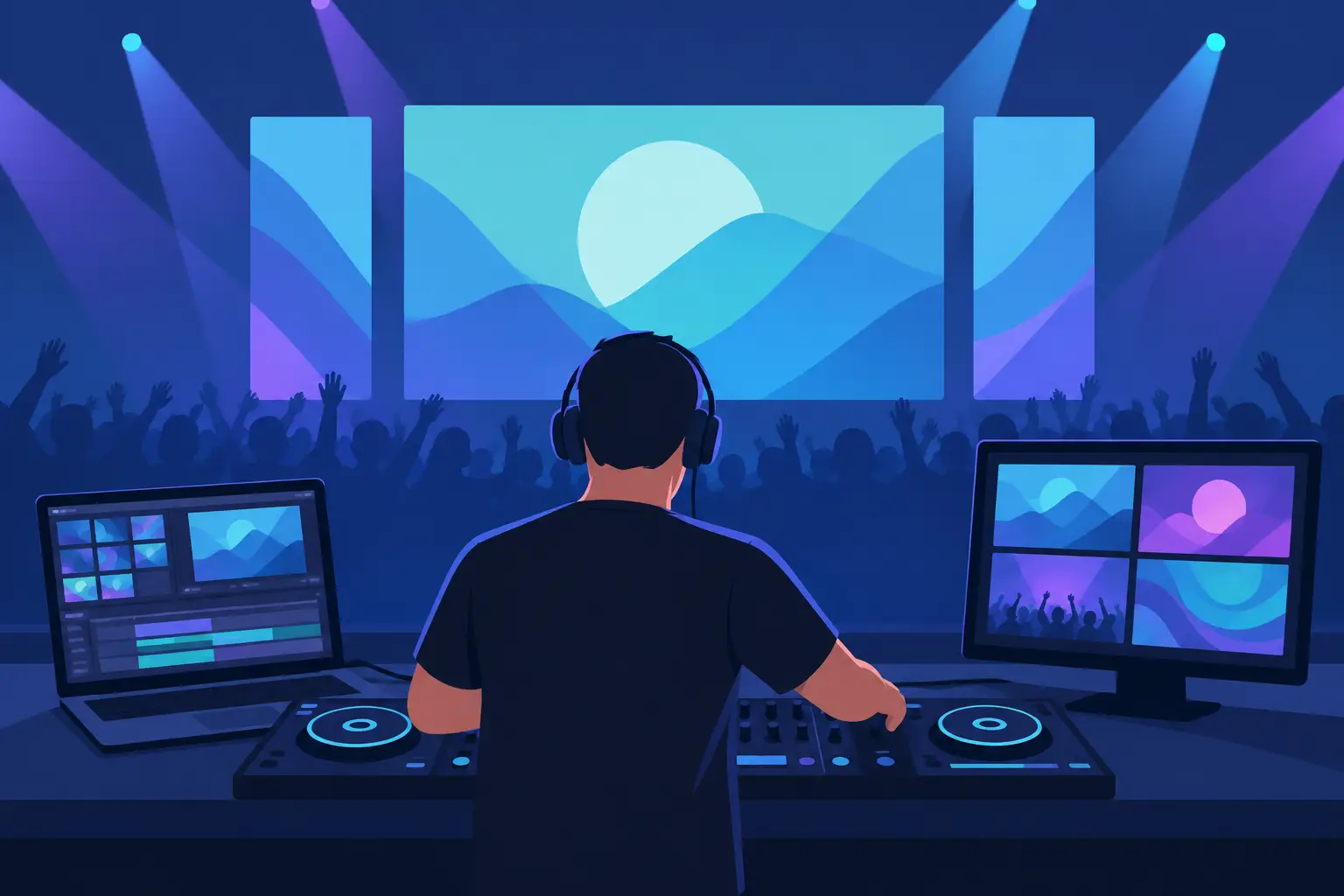
A strong video DJ workflow guide starts before the first track plays. When a screen goes black, a music video starts at the wrong point, or an unplanned visual clashes with a wedding toast, the crowd notices instantly. Great video DJs do not rely on luck. They build a repeatable system that lets them mix music, control visuals, and react to the room without losing momentum.
Video DJing adds another creative layer to every set. It can turn a familiar party record into a full-room moment, support a themed event, or give a club set the visual edge that separates it from an ordinary audio mix. But it also adds more files, more technical decisions, and more ways for a poorly prepared setup to fail. The answer is not a complicated process. It is a disciplined one.
Build Your Video DJ Workflow Before the Gig
Your workflow should begin with the event brief. A nightclub residency, school dance, corporate event, and Latin night may all use the same decks, but they need very different visual decisions. Ask what screens are available, where they are positioned, who controls the house video system, and whether any content restrictions apply. A venue with LED walls behind the booth gives you room for high-impact visuals. A restaurant with televisions around the room calls for more restrained programming.
Then organize your music and video library around how you actually perform. Genre folders are useful, but performance-oriented categories are faster under pressure. Create groups such as openers, singalongs, peak-time anthems, dinner background, slow jams, clean edits, and closers. Add event-specific folders for the client, theme, or audience.
Video files need the same attention as audio files. Check that the music videos, visualizers, lyric videos, and loops you plan to use play correctly and have consistent quality. A low-resolution clip can look worse than no video when it is stretched across a large screen. If your library includes mixed formats and resolutions, test them on the display type you will use whenever possible.
Metadata is where preparation turns into speed. Give tracks useful comments, energy ratings, color labels, and tags for explicit content, language, era, or visual style. A note such as “great chorus visual” or “long intro, clean video” can save a decision in the middle of a packed dance floor.
Design Visual Energy, Not Just Video Playback
The biggest mistake in video DJing is treating every song as a requirement to play its official music video. Official videos can be powerful, especially for recognizable hits, but they are not always the right choice. Some have slow openings, dialogue, dark scenes, or imagery that does not suit the event. Other tracks are better supported by a loop, a custom visual, a branded graphic, or a lyric presentation.
Think in visual energy levels. During arrivals, cocktails, or dinner, use subtle motion graphics and lighter visual movement. When the room is building, bring in music videos and recognizable artist footage. At peak time, use bold, high-contrast content that matches the impact of the record. The visual should reinforce the moment, not compete with it.
This is especially valuable for transitions. An audio transition may be technically perfect, yet the jump from a cinematic R&B video to a flashing EDM clip can feel abrupt. Use loops, logo animations, or effect layers as visual bridges when two songs do not naturally connect on screen. A short visual reset gives the audience a clean change of scene while your mix moves forward.
Do not overuse effects simply because they are available. Constant flashes, spins, and overlays can tire the room and make polished content look cheap. Save dramatic visual effects for drops, beat switches, genre flips, and crowd-response moments. Restraint makes the big moves hit harder.
Prepare Cues for Music and Images
Audio cue points tell you where to mix. Video cue points tell you where the audience should start watching. Those are not always the same moment.
Set a cue at the clean musical intro for mixing, then consider a second cue where the video becomes visually interesting. If a song begins with ten seconds of a black screen, movie dialogue, or an extended title card, you may want to start the visual later while the audio intro plays over a loop or another video source. For tracks with iconic opening shots, the opposite may be true: show the video immediately and let that recognition work for you.
Hot cues are also ideal for performance moments. Mark a major chorus, a dance break, a recognizable lyric, or a scene that lands perfectly on a beat drop. You are not required to use every cue in every set, but having them ready means you can capitalize when the crowd gives you a signal.
Practice video transitions with the same seriousness as beatmatching. Test crossfades, cuts, fades to loop, and effect transitions. Some mixes look best with a fast cut on the downbeat. Others need a longer blend so the image change does not feel jarring. The right approach depends on the songs, the screen size, and how closely the audience is watching the visuals.
Keep the Booth Focused and the Screen Intentional
A video DJ has two audiences: the crowd in front of the booth and the crowd watching the screens. Your laptop layout should make both manageable. Keep deck information, browser access, waveforms, and video preview visible without forcing you to hunt through panels. Map essential controls to your controller where practical, especially video crossfader behavior, effects, loop triggers, and emergency output controls.
VirtualDJ can bring audio, video, karaoke, stems, effects, and controller customization into one performance environment, which matters when your show needs to change direction quickly. The real advantage is control: build an interface and mapping that support your habits instead of slowing them down.
Screen placement changes your performance style. If the display is behind you, check it occasionally but do not turn your back on the room. If monitors are around the venue, make sure your content works in fragments because guests may only see it for a few seconds at a time. If there are multiple displays, confirm whether they mirror the same output or need separate feeds.
For mobile events, protect the client experience. Avoid visuals that may be inappropriate, overly suggestive, politically charged, or full of unedited language. A clean music edit does not guarantee a clean video. Preview content and maintain a trusted folder of event-safe visuals so you never have to guess during a request.
Build a Backup Plan That Performs
Video performance reliability is won in preparation. Bring the adapters, cables, power supplies, and backup media needed for the venue's input. HDMI is common, but not universal. A display may require USB-C, DisplayPort, SDI through a production system, or an adapter that the venue expects you to provide. Confirm the connection before doors open, not while the first guests are arriving.
Keep a backup video source ready. This can be a second laptop, a prepared external drive, or a fallback collection of high-quality loops that can carry the screen if a specific file fails. Also prepare for the possibility that the entire video feed goes down. Your audio set should remain strong enough to stand on its own. Video elevates the performance, but the music still leads the room.
Test CPU load before the event, particularly if you plan to use real-time stems, high-resolution video, multiple effects, or external displays. A feature that works fine in a bedroom test can strain a computer after hours of performance. Close unnecessary applications, manage power settings, and avoid adding unfamiliar extensions or updates right before a paid show.
Run the Set Like a Live Editor
Once the event starts, do not become a passenger to your prepared crates. Watch the room and edit in real time. If guests are singing every word, give them a lyric video or an iconic artist clip. If they are dancing without looking up, let the visuals support the beat rather than demanding attention. If the energy drops, a familiar visual can help re-engage a distracted crowd before you change musical direction.
Requests are another opportunity. When you accept one, search beyond the audio file. Does it have a usable video? Is there a cleaner lyric version? Would a themed loop work better? A quick visual decision can make a request feel intentionally programmed rather than dropped into the set.
Record notes after each performance. Which formats played reliably? Which videos got the strongest response? Where did the screen setup create problems? Your best workflow will not come from copying another DJ's folder structure. It comes from improving your own system after every room, every crowd, and every unexpected technical curveball.
The goal is simple: make the technology disappear behind the performance. When your files are organized, cues are intentional, visuals match the music, and backups are ready, you gain the freedom to take creative risks where they count - in front of the crowd.